Add Row
Add Element
vitality for men
update

Vitality for Men Atlanta

update
Add Element
  • Home
  • Categories
    • Men's Health
    • Vitality
    • Fitness
    • Nutrition
    • Lifestyle
    • Mental Health
    • Atlanta
    • Self-Care
    • News
Add Element
  • update
  • update
  • update
  • update
  • update
  • update
  • update
August 06.2025
3 Minutes Read

The Titan Sub Implosion: Toxic Workplace Culture Exposed

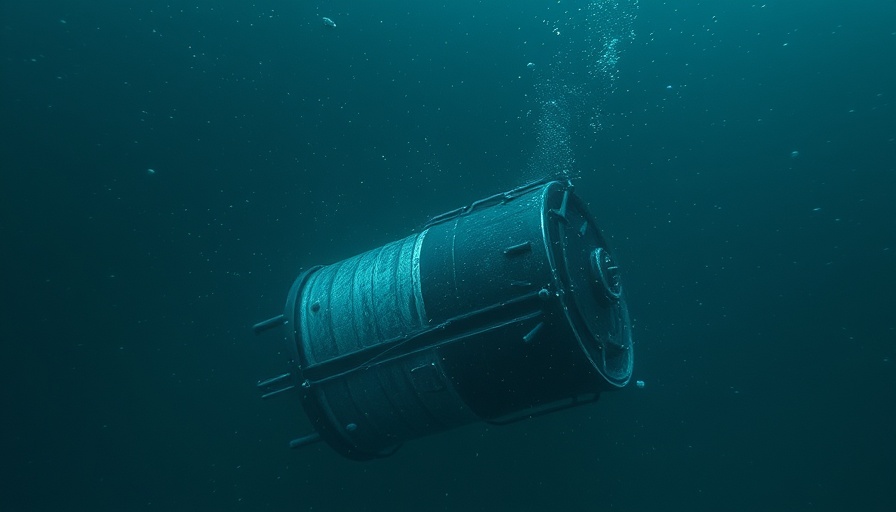
Titan sub implosion debris scattered underwater, symbolizing toxic workplace culture.

Investigating the Titan Sub Implosion: A Case Study in Workplace Culture

The tragic implosion of the Titan submersible in 2023 was not just a catastrophic engineering failure; it serves as a serious warning about the consequences of a toxic workplace environment. A recent report from the US Coast Guard convincingly argues that the leadership of OceanGate, specifically CEO Stockton Rush, fostered a workplace that prioritized intimidation over safety. The findings underscore a critical need for both employees and stakeholders to recognize how workplace culture can directly impact operational success and safety.

The Dissecting Report: Key Findings Revealed

The report highlighted not only the technical faults of the Titan, which included being "undocumented, unregistered, non-certificated, [and] unclassed," but also the terrifying workplace culture that precipitated the tragedy. It detailed how Rush employed intimidation tactics to circumvent safety regulations, which ultimately culminated in the deaths of five individuals aboard the submersible. The documentation paints a picture of unyielding pressure to perform despite the glaring safety concerns.

Leadership Under Scrutiny: Who Was Stockton Rush?

Stockton Rush’s approach to management is drawing scrutiny—as evidenced by anecdotes surrounding his leadership style. One memorable moment is highlighted in a CBS Sunday Morning segment where Rush showed off a common video game controller used to pilot the Titan. This light-hearted introduction belied the serious implications of employing such technology in an environment where the stakes are literally life and death.

Rush’s decision to use consumer-grade tech for critical functions raises questions about the seriousness and professionalism within OceanGate. Features like a game controller seem innocuous but hint at a larger pattern of oversight and negligence that goes unchecked within the company, emphasizing a culture that prioritizes cost-cutting over comprehensive safety protocols.

Parallel Examples: Lessons from Other Industries

In tech-forward industries, we often witness parallels to OceanGate’s situation. For instance, high-pressure environments in Silicon Valley have led to their own controversies around workplace culture, pushing companies like Uber and Tesla into the spotlight for toxic behaviors that overlook safety and employee wellbeing. The Titan incident reiterates that without proper oversight and a nurturing context, organizations risk catastrophic failures.

Drawing lessons from these counterexamples, companies must address and reform their organizational cultures proactively rather than waiting for tragedies to occur.

The Role of Regulatory Oversight in Safety

Regulations exist for a reason: they are designed to protect not only consumers but also employees. The Titan incident revealed loopholes in the oversight of deep-sea ventures, raising important questions about how companies like OceanGate operate outside the bounds of conventional certification. Regulations must evolve alongside technological advancements, reflecting changing risks and complexities in new fields such as submersible technology.

Ensuring that comprehensive regulations exist can prevent tragedies like Titan’s from becoming the norm rather than the exception, fostering a climate where safety is central to operational success.

Future Predictions: How Will Workplace Culture Evolve?

As we move deeper into the 21st century, workplace culture will likely continue to evolve in response to tragedies like the Titan implosion. Companies that prioritize transparency, employee wellbeing, and safety will find themselves at an advantage as public scrutiny intensifies. The future may also see investors becoming more discerning, favoring organizations that demonstrate a commitment to employee safety and ethical practices.

Understanding these trends can influence how potential future leaders approach their governance and strategy, affecting their business outcomes.

Call to Action: A Reminder to Reflect

The tragic events surrounding the Titan submersible serve as a potent reminder of the critical need to assess workplace cultures rigorously, particularly in high-risk sectors. Coming forward to advocate for better practices within organizations promotes an environment where employees feel safe and valued. Ask ourselves: Are we fostering a culture where safety is paramount? In considering your professional environments, it’s essential to advocate for change and hold leadership accountable for cultural shifts that prioritize safety and employee welfare.

Reflect and act before another tragedy unfolds.

News

2 Views

0 Comments

Write A Comment

*
*
Related Posts All Posts
12.24.2025

Judge Rules U.S. Must Uphold Due Process for Deported Venezuelans

Update The Crucial Ruling on Due Process Rights for DeporteesIn a landmark decision, Federal Judge James Boasberg asserted that the U.S. government must uphold due process rights for Venezuelan men deported to a prison in El Salvador under the controversial Alien Enemies Act. The ruling highlights critical issues surrounding immigration policy during the Trump administration, emphasizing the necessity of legal recourse for individuals facing removal.The case arose after the Trump administration invoked the 1798 Alien Enemies Act in March 2025, targeting members of Tren de Aragua, a Venezuelan gang alleged to be involved in criminal activities in the U.S. According to reports, around 137 individuals were deported to El Salvador under this act before the legality of this move was challenged. Organizations such as the American Civil Liberties Union (ACLU) and Democracy Forward argued that these deportations were carried out without proper legal hearings, violating fundamental rights.Understanding the Alien Enemies Act and its ImplicationsHistorically, the Alien Enemies Act has been a tool of considerable contention, utilized primarily during wartime. Its invocation against individuals who have not been proven to pose a legitimate threat raises profound concerns about civil liberties. As noted by Judge Boasberg, the ability to seek a legal remedy is not just a procedural matter; it reflects a central principle of justice that even those not holding citizenship in the country deserve protection under law.The ruling mandates the U.S. government to facilitate hearings for the deported individuals, allowing them to contest their removals based on claims of wrongful deportation. This illustrates a significant acknowledgment that expedited deportation processes should not nullify an individual's rights to a fair hearing, regardless of their immigration status.The Broader Context of Immigration PoliciesThis case reignites discussions on the Trump administration's approach to immigration and the legal frameworks employed to carry out deportations. The diverging perspectives within the legal community reflect ongoing tensions regarding executive power and civil rights in the U.S. legal landscape. Critics argue that swift deportation practices undermine justice, while supporters claim it is necessary for national security. The court’s emphasis on due process aims to strike a balance between these conflicting viewpoints, asserting that governmental mistakes should not lead to irrevocable life-altering consequences for individuals.As conversations about immigration continue, this ruling may pave the way for re-evaluating how such laws are applied and remind us of the ongoing need for vigilance in protecting human rights.

12.24.2025

Tory Bruno's Sudden Exit: What It Means for ULA's Future

Update The Unexpected Departure: Tory Bruno Resigns In a surprising turn of events, Tory Bruno has resigned as CEO of United Launch Alliance (ULA) after leading the company for over a decade. This unexpected announcement came amidst significant challenges faced by ULA, notably in the highly competitive space launch sector, where companies like SpaceX have begun to dominate the market. Bruno's departure marks a pivotal moment for ULA as it grapples with its legacy and attempts to regain its competitive edge. Bruno's Legacy at ULA Tory Bruno took the helm of ULA in August 2014 during a tumultuous time when SpaceX was gaining traction with its innovative Falcon 9 rocket. Bruno's strategic vision led to the initiation of the Vulcan rocket program, intended to replace aging launch vehicles like the Atlas V and Delta IV. He made the crucial decision to partner with Blue Origin for the Vulcan's engines, a move that appears increasingly prescient given the geopolitical landscape that demands reduced dependency on Russian technology. Bruno's emphasis on innovation and a more modern approach to space launch services was evident, but ULA’s transition has not been without difficulties. The adoption of an expendable model for the Vulcan rocket limited potential efficiency gains that could have come from a reusable design like those pioneered by SpaceX. A Tough Market Landscape During Bruno's leadership, ULA’s market share has dwindled. SpaceX overtook ULA for military satellite launches, marking a significant shift in the space industry. ULA's struggles continued with delayed launches and operational adjustments, particularly in realizing Bruno's ambitious goal of flying Vulcan up to ten times in a single year. Instead, Vulcan has only launched once since receiving certification from the US Space Force, complicating ULA's standing in the military launch sector. This decline was compounded by layoffs and facility closures across several ULA locations, including Florida and California, leaving many industry observers questioning the viability of ULA as it once stood strong against its competitors. Unpacking the Future of ULA Bruno’s resignation presents both challenges and opportunities for ULA as it looks to the future. With John Elbon stepping in as interim CEO, the company faces the pressing task of revamping its strategies to compete effectively against SpaceX and other emerging players in the space launch market. The company has hinted at potential advancements in reusing their rockets, though specifics remain scarce. The direction ULA takes in the coming months under new leadership will be crucial as it seeks to regain trust among government contracts and commercial ventures alike. The Importance of Leadership in Aerospace Leadership in the aerospace industry is often characterized by its high stakes and competitive nature. Bruno's case exemplifies how critical effective strategic decisions are for survival in this field. ULA’s partnership choices, funding issues, and product developments under his direction reflect the intricate web of corporate relations in aerospace. The next leader will need to navigate these challenges with agility and innovative thinking. Bruno maintained a personable public profile, engaging directly with the community of space enthusiasts, which was refreshing in an industry typically dominated by less accessible figures. This approach may need to continue under new management to keep morale high and engage stakeholders as ULA transitions into this uncertain phase. Conclusion: A Time for Reflection and Action The departure of Tory Bruno is a pivotal moment for ULA, representing both a loss and an opportunity for reinvention. As the aerospace landscape becomes more crowded and technologically complex, the need for innovative leadership will only grow. The coming months will be critical for ULA to define its path forward amidst the continued rise of competitors prepared to challenge the status quo. Now more than ever, professionals and enthusiasts within the aerospace industry must stay informed about ULA’s next moves and the broader implications for space exploration and commercial satellite deployment. Stay tuned as we follow this evolving story—there's much more to come in the high-stakes world of aerospace.

12.23.2025

Pacific Ocean Unveils 20 New Species: A Remarkable Marine Discovery

Update A Deep Dive into Discovery: New Marine Life Uncovered In a groundbreaking exploration of the Pacific Ocean, researchers from the California Academy of Sciences have identified at least 20 new species inhabiting the depths of Guam's coral reefs. The findings stem from the retrieval of 13 reef monitoring devices, known as autonomous reef monitoring structures (ARMS), placed over 330 feet deep in these underwater ecosystems. With data dating back to 2018, the scientists have not only made new species discoveries but have also collected around 2,000 specimens, revealing 100 species not previously documented in this region. The Twilight Zone of Innovation Scientists have been exploring what is termed the "twilight zone," a section of the ocean where very little light penetrates, making the study of marine life particularly challenging. This area, which extends from 180 to 330 feet below the surface, is critical for understanding the biodiversity that thrives in depths that remain largely uncharted. Luiz Rocha, the ichthyology curator at the California Academy of Sciences, stated, "We expect to discover more than 20 new species as genetic analysis continues to confirm what constitutes new life forms." Among these potential discoveries are various crabs, sponges, and corals, including some of the elusive gorgonian types. Cultural Connections and Reef Ecology Deep-sea discoveries not only enhance our scientific understanding but also carry significant cultural implications. For instance, the emergence of a new coral species named Iridogorgia chewbacca, resembling the iconic character from Star Wars, underscores the intersection of popular culture and marine biology. Researchers emphasize the importance of protecting these fragile ecosystems, which house hundreds of thousands of species that must be preserved for future generations. Rocha's team is now embarking on a two-year expedition to retrieve additional monitoring devices, expanding their research across Palau and French Polynesia. Lessons in Biodiversity and Conservation The discoveries made in the Pacific Ocean come at a time when biodiversity is increasingly threatened by climate change and human activity. As the research continues to evolve, the urgency to safeguard these unique ecosystems grows. Rocha poignantly remarked, “They should have as much right to exist as we do.” The findings also dovetail with recent research across the globe, revealing unforeseen levels of diversity in coral species that were once thought to be well understood. Researchers increasingly recognize that understanding the true complexity of marine life is essential to effective conservation efforts. Conclusion: Protecting the Unknown This latest expedition serves as a reminder of the vast uncharted territories within our oceans and the countless species that await discovery. The importance of ongoing research and conservation cannot be overstated as humanity seeks to protect these fragile environments. Engaging with marine conservation efforts and advocating for the protection of our oceans is essential for preserving the wealth of biodiversity found within. For those passionate about marine conservation and eager to learn more about preserving our underwater heritage, consider engaging with local conservation initiatives or supporting marine research projects.

Terms of Service

Privacy Policy

Core Modal Title

Sorry, no results found

You Might Find These Articles Interesting

T
Please Check Your Email
We Will Be Following Up Shortly
*
*
*