Add Row
Add Element
vitality for men
update

Vitality for Men Atlanta

update
Add Element
  • Home
  • Categories
    • Men's Health
    • Vitality
    • Fitness
    • Nutrition
    • Lifestyle
    • Mental Health
    • Atlanta
    • Self-Care
    • News
Add Element
  • update
  • update
  • update
  • update
  • update
  • update
  • update
April 10.2025
2 Minutes Read

Musk vs. Navarro: Truth Behind the Tesla Manufacturing Debate Exposed

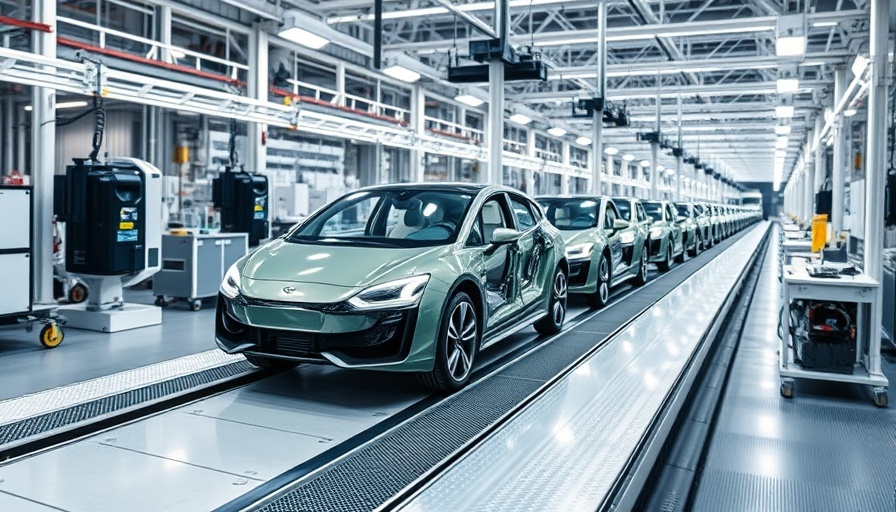
Tesla assembly line with unfinished cars in bright factory.

Understanding the Feud: Musk vs. Navarro

The public spat between Tesla CEO Elon Musk and former Trump advisor Peter Navarro has showcased not only their differing views but also raised crucial questions about what it truly means to manufacture cars in America. Musk, known for his technological advancements and outspoken nature, counters Navarro's claims with data, asserting that Tesla relies heavily on American-made components.

The Truth Behind Tesla's Manufacturing Claims

Navarro's recent comments suggested that Tesla vehicles are merely assembled using imported parts, igniting a fiery response from Musk. On social media, Musk denounced Navarro's assertion as false, stating, "Tesla has the most American-made cars." Current data supports Musk’s argument, pointing to a significant 75% U.S. content in Tesla’s Model 3 Long Range, which stands in contrast to many competitors.

Vertical Integration in Auto Manufacturing

One of the reasons Musk emphasizes Tesla's manufacturing prowess is the company's approach to vertical integration; Tesla produces many of its components in-house, unlike more conventional automakers who rely on an intricate global supply chain. By controlling the manufacturing process, Tesla can assert greater compliance with the 'Made in America' label. This strategic decision not only differentiates Tesla from its peers but also helps minimize potential disruptions from tariffs that typically impact the industry more heavily.

Tariffs and Their Impact on Auto Manufacturing

Navarro argues that Musk's opposition to tariffs stems from a desire for cheaper foreign parts, however, analysts point out that Tesla may face far fewer repercussions than traditional automotive manufacturers. With projected impacts around 5% on Tesla’s gross profit margins compared to the 10-20% anticipated for others, it's evident that their operational choices are crafted for resilience against such economic challenges.

The Bigger Picture: Politics and Business

Ultimately, this feud illustrates a broader dynamic where business, technology, and politics intersect. Musk's success hinges not only on his innovative products but also on navigating the geopolitical landscape, particularly as it pertains to manufacturing practices and trade policies. The debate over American-made products continues to resonate with consumers, reflecting their attachment to national pride in manufacturing.

As the controversy unfolds, consumers are encouraged to stay informed about these discussions, especially as they directly impact the automotive landscape and the economy at large. Understanding where and how products are manufactured can empower consumer choices.

News

2 Views

0 Comments

Write A Comment

*
*
Related Posts All Posts
01.20.2026

Troops on Standby in Minnesota: What This Means for National Security

Update As Tensions Rise, Minnesota Faces Federal Scrutiny Amid significant social unrest triggered by escalating federal immigration actions, Minnesota braces for a potential deployment of 1,500 active-duty troops from Alaska. These preparations come in response to protests against federal Immigration and Customs Enforcement (ICE) operations, notably following the tragic shooting of Renee Nicole Good by an ICE agent. Activists and local officials express concerns over constitutional rights being violated as they face an increased military presence. The Human Element: Voices from the Ground Local residents are mobilizing to document ICE activities, driven by a desire to protect their communities. Protester “Sunshine” shared her experience of observing ICE agents, asserting her legal right to monitor federal actions. Many residents, including “Misko,” oppose what they characterize as an intimidation campaign by federal forces. Their determination shines through amid harsh winter conditions, showcasing a community resilient against perceived authoritarianism. Implications of the Troop Deployment The possibility of military troops policing Minnesota highlights serious implications for civil liberties. Critics warn that invoking the Insurrection Act would mark a federal overreach, challenging the balance of power between state and federal governance. As protests escalate, Democrats in Minnesota are pursuing legal remedies, aiming to curb what they view as an unconstitutional invasion. A Broader Context: Trump's Global Aspirations In a related development, President Trump has announced plans for a "Board of Peace" aimed at addressing conflicts in Gaza and beyond. This proposal anticipates significant funding contributions from international partners, although critics argue it expands U.S. influence at the potential expense of existing international frameworks, like the United Nations. Such moves reflect a U.S. foreign policy steeped in ambition but fraught with controversy. Conclusion: The Intersection of Domestic and Global Issues The unfolding events in Minnesota exemplify a crucial moment in the intersection of domestic policy and international affairs. As tensions continue within the U.S., particularly regarding immigration enforcement, a vigilant public and local leaders search for pathways to justice and equity against the backdrop of a complex global stage. Community voices highlight the importance of accountability and the need for a government that listens to its citizens.

01.20.2026

The Hidden Costs of AI Coding Agents: Learning vs. Burnout

Update The Double-Edged Sword of AI Coding Agents In a world where artificial intelligence promises to supercharge productivity, many aspiring coders and seasoned developers alike face a bewildering paradox: while AI coding agents like Claude Code and OpenAI’s Codex offer unprecedented capabilities, they also risk instigating burnout. This is evident from experiences shared by users who have dramatically increased their coding output while simultaneously feeling the distinct strain of overexertion. AI: A Catalyst for Creativity or Burnout? AI coding assistants can deliver rapid results, creating prototypes or coding snippets at lightning speed. Benj Edwards’s experience showcases this potential; after diving into AI-assisted software development, the joy of creating projects surged. However, like that 3D printer producing imperfect models, the same tools that encourage creativity may inadvertently compromise the foundational growth of learning programming skills, leading to a hollow understanding of code. Edwards’s reflection of having fun while working with AI contrasts sharply with the notion of how that same rush can lead to delinquency in critical thinking—a notion echoed by programmer Saeed Hasani, who believes that passively relying on AI creativity results in skill stagnation. The Pressure Cooker Environment in Tech Industry insiders reveal that pressure to innovate at breakneck speeds has led to burnout among AI engineers at major tech companies. Many report that rapid rollouts cater more to investor satisfaction than user experience. Per a report from CNBC, engineers often work in a relentless "rat race", where quality yields to speed, raising ethical concerns about the real-world implications of their work. Walking a Tightrope: Balancing Innovation with Learning The blurring lines between leveraging AI for productivity and risking real burnout reflect a changing paradigm. As these AI tools gain popularity and our reliance on them intensifies, it raises important questions. Are they truly enhancing our capabilities or are we losing vital developmental experiences and the ability to troubleshoot on our own? As Edwards experienced, diving deep into personal projects with AI brought high output but also fatigue. It’s essential for users to strike a balance, utilizing AI to complement their skills while ensuring active engagement in the learning process. Future Predictions: A New Age of Development As AI continues its rapid development, the tech community must prepare for a future where the reliance on AI tools grows even stronger. This evolution may redefine software engineering roles, where developers are not merely coders but also educators, mentors, and critical thinkers shaping the next generation of AI tools while fostering an environment of ongoing learning. What the AI Evolution Means for You If you are an aspiring programmer or a tech professional, understanding this changing landscape is vital. Embracing AI agents can boost productivity, but it’s equally important to delve into the “why” behind the code; to engage with complex problems rather than retreating into simplicity. Take inspiration from Edwards and Hasani, and allow yourself the time to grapple with challenges. You’ll emerge richer in knowledge and equipped with a deeper understanding of your craft. Call to Action: Reflect and Adapt As you navigate the AI landscape, take a moment to assess your coding practices. Are you leaning too heavily on quick fixes from AI? Push yourself to deepen your understanding of programming concepts beyond using AI-generated code. Engage with peers, seek answers actively, and cultivate your coding intuition. The journey of learning is invaluable, ensuring that AI serves as a tool, not a crutch, for your programming growth.

01.19.2026

What Lies Ahead for Venezuela Amid Cabello's Continued Influence?

Update Venezuela's Hardline Enforcer: The Role of Diosdado Cabello In the wake of Nicolás Maduro's dramatic capture by U.S. forces, Venezuela finds itself at a political crossroads marked by tension and uncertainty. With interim President Delcy Rodríguez at the helm, the nation is navigating the delicate aftermath of a leadership vacuum. However, it is Diosdado Cabello, the interior minister and Maduro's staunchest enforcer, who continues to hold sway over the streets of Caracas. Cabello, often likened to an octopus for his expansive influence, is not only feared but also viewed as a key player in Venezuela's power dynamics. Known for his hardline tactics, he has publicly denounced the U.S. operation that removed Maduro, urging citizens to rally and defend the Bolivarian revolution. Despite being indicted in the U.S. on charges related to drug trafficking and narco-terrorism, Cabello retains substantial control over the security apparatus of the nation, overseeing police and prison operations. The Fragile Power Structure in Venezuela The political fabric of Venezuela can be summarized in a tense relationship between Cabello and interim President Rodríguez, who must balance the interests of varied factions within a fraught national landscape. While Rodríguez, with her public commitments to the U.S., is seen as a symbol of change, many Venezuelans remain skeptical about true reform. With Cabello's long-standing ties to Maduro and the military, concerns abound that his resilience may lead to continued repression of political dissent and civil liberties. Implications for U.S. Strategy in Venezuela The U.S. has focused its efforts on stabilizing Venezuela without deploying troops, relying on figures like Cabello to maintain order during this transition. However, the question remains whether Cabello will cooperate with U.S. demands or attempt to consolidate power in defiance of international pressure. His actions in the coming weeks will significantly shape both domestic governance and international relations. Future Predictions: A Road Ahead for Venezuela The balance of power, particularly with Cabello at the forefront, places Venezuela at a precarious juncture. While the absence of Maduro has sparked hopes for reform, Cabello’s entrenched position raises doubts about the extent to which this transition will yield genuine political change. As international scrutiny continues and the U.S. prepares its next steps, Venezuelans watch closely to see whether their country can move toward a more democratic future—or if it will remain shackled under fear and authoritarian rule. Amidst ongoing fears of instability and the potential resurgence of violence, the resilience of Venezuelans is put to the test. The coming months will reveal whether Cabello's grip on power can withstand internal and external pressures. For those invested in the region's stability, the focus will remain on how these developments unfold and what they mean for the broader geopolitical landscape.

Terms of Service

Privacy Policy

Core Modal Title

Sorry, no results found

You Might Find These Articles Interesting

T
Please Check Your Email
We Will Be Following Up Shortly
*
*
*